
TRIAPLEX B FAQs
ADVANCED ORGANIC CLIMATE SMART BEESWAX TRIA DELIVERY SYSTEM FOR ALL PLANTS
Here is a selection of some frequently asked questions about Triaplex B for your convenience.
General Directions
The Triple P® (Plant Promotion Products) range is formulated for the protection and biostimulation of professional plant growth programmes. TRIAPLEX B® is an advanced smart formulation delivery system for Triacontan-1-ol (TRIA) (CH3(CH2)28(CH)2 OH).
What is the Mechanism of Action (MOA) of 1-Triacontanol (TRIA)?
TRIA is an endogenous plant grow regulator and metabolic signalling agent found in plant cuticle waxes and beeswax and is abundant in the leaves of most plants. It is a natural 30-carbon saturated primary aliphatic fatty alcohol that functions in ultra-potent nanomolar and picomolar concentrations.
Operating independent membrane-bound receptors, it works by triggering a rapid 9-β-L-adenosine secondary messenger (TRIM, TRIacontan-1-ol second Messenger) pathway to enhance photosynthesis, nutrient absorption and stress resistance.
- Biophysical Membrane Insertion and Lipid Bilayer Interaction:
Because of its highly lipophilic 30-carbon chain, exogenous triacontan-1-ol rapidly integrates directly into the hydrophobic core of the plant cell's outer membrane (the plasmalemma). Rather than docking with a lock-and-key receptor protein, the physical presence of this long-chain alcohol alters the local packing parameters, structural lateral pressure and fluidity of the membrane lipid bilayer.
- Enzymatic Activation of NADH Oxidase:
This structural distortion within the plasma membrane matrix induces a conformational shift that directly stimulates the enzymatic activity of membrane-bound NADH oxidase. Studies demonstrate that triacontane-1-ol exposure increases NADH oxidase activity by approximately 50% within seconds of contact, establishing the primary biochemical catalyst for the plant growth response.
- Intracellular Synthesis of the 9-β-L-Adenosine Second Messenger:
The sudden surge in NADH oxidase activity prompts the immediate intracellular release of 9-β-L-adenosine into the cytoplasm. Operating as the plant's essential, fast-acting secondary messenger, 9-β-L-adenosine amplifies the initial outer-membrane physical signal across the internal cellular matrix within 1 to 5 minutes of contact.
- Transmembrane Ion Fluxes and Membrane Potential Alteration:
The structural release of the L-adenosine secondary messenger immediately opens specific transmembrane ion channels. This triggers a rapid, measurable influx of intracellular Calcium (Ca2+) and Magnesium (Mg2+) ions from the apoplast into the cytoplasm, shifting cellular membrane potentials and activating resting metabolic pathways. Calcium binds to calmodulin and activates membrane pumps like Ca2+/Mg2+-ATPase, boosting cell energy flow.
- Up-Regulation of Photosynthesis-Associated Gene Expression:
This cytoplasmic ion shift alters the signalling environment within the cell nucleus and chloroplasts, leading to the rapid up-regulation of target gene expression within the plant's cellular DNA:
- Chloroplast Structural Synthesis: The L-adenosine secondary messenger cascade triggers the rapid transcriptional up-regulation of the nuclear chlD and chlI genes, which code for the essential structural and catalytic subunits of the Magnesium Chelatase enzyme complex. This up-regulation accelerates the insertion of Magnesium (Mg²⁺) into Protoporphyrin IX—the absolute rate-limiting step in chlorophyll biosynthesis. Co-formulation with 1% elemental magnesium directly synchronises nutrient availability with this genetic demand, preventing an intracellular energy lag and forcing an immediate increase in light-harvesting capacity.
- Enzymatic Photosynthetic Efficiency: It up-regulates the expression of the large subunit of ribulose-1,5-bisphosphate carboxylase-oxygenase (Rubisco), the plant’s primary sugar-producing enzyme, maximizing its capacity to process carbon dioxide (CO2).
- Additional Genetic and Molecular Regulation:
- Water Channels: It regulates aquaporin genes (such as PIP1,1 and PIP2,4) to improve water flow through plant tissues.
- Hormone Crosstalk: It interacts directly with plant defence hormones like jasmonic acid, salicylic acid, and ethylene.
Why is TRIAPLEX B® a Smart Formulation using Green Chemistry and Safe and Sustainable by Design (SSbD) principles?
Instead of relying on conventional environmentally harmful synthetic chemicals, it utilises stimuli-responsive rheology modifiers, molecular encapsulation and physiological synergy. Every ingredient serves a dual purpose: maintaining stability in the bottle while actively enhancing plant performance using entirely bio-based, non-toxic active substances. To achieve this, a precise sequential manufacturing workflow is required: the triacontan-1-ol guest is first pre-complexed within the β-cyclodextrin host matrix to form a stable aqueous microcrystalline suspension phase (Host-Guest Suspension Concentrate (SC)/Solid-in-liquid Dispersion) before being carefully blended with the emulsified biosurfactant phases and ionic mineral solutes into a continuous, polymer-stabilised aqueous medium to prevent heteroflocculation.
Advanced Suspoemulsion Formulation
Molecular Mechanisms and Green Chemistry Profiles of Ingredients
- β-Cyclodextrin (β-CD)
- Mechanism: Supramolecular Host-Guest Inclusion Complexation Driven by Hydrophobic Interactions
- Physicochemical Phenomenon: β-cyclodextrin is a cyclic oligosaccharide comprising seven α-D-glucopyranose units, possessing a truncated toroidal geometry. The inner cavity is hydrophobic due to the shielding of skeletal carbons and glycosidic oxygens, while the exterior periphery is highly hydrophilic owing to primary and secondary hydroxyl groups. TRIA, an aliphatic, long-chain primary fatty alcohol (C30H62O), exhibits extreme hydrophobicity and thermodynamically drives its own self-association and crystallization in aqueous media, resulting in negligible bioavailability.
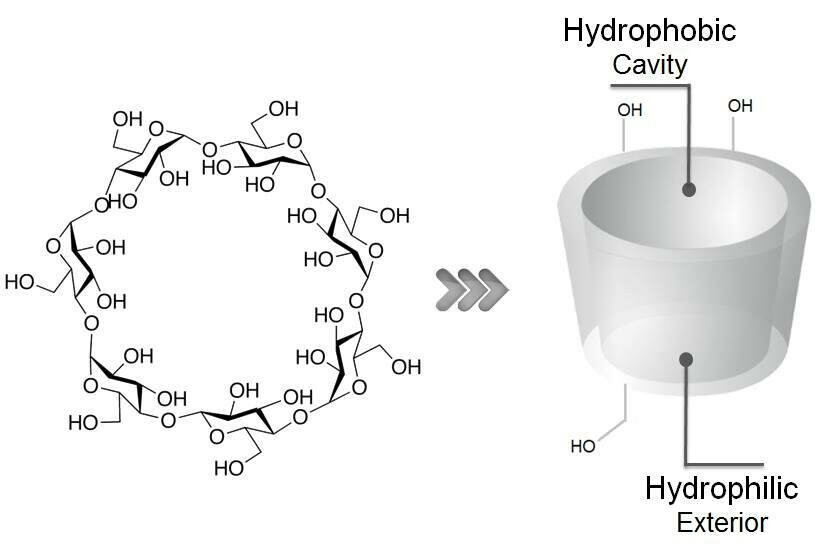
- Molecular Dynamic: In this system, the lipophilic hydrocarbon tail of the monomeric TRIA guest molecule undergoes intracavity partitioning, displacing high-energy, enthalpically unfavourable water molecules from the β-CD cavity. This creates a stable, non-covalent, reversible host-guest complex held together by van der Waals forces and hydrophobic stabilisation.
- The 'Smart' and 'Green' Matrix: It acts as a nanoscale molecular chaperone. This complexation shifts the phase equilibrium to drastically enhance the apparent water solubility of TRIA, completely bypassing the need for hazardous aromatic or chlorinated organic solvents (Green Chemistry Principle 5: Safer Solvents). Upon foliar deposition, localised shifts in concentration and hydration break the thermodynamic equilibrium, liberating monomeric, bioavailable TRIA at the precise molecular boundaries required to bind to cell-surface lipid membranes.
- Beeswax-Derived Triacontanol (Active Substance)
- Mechanism: Upregulation of the Secondary Messenger 9-β-L(+)-Adenosine (TRIM) Signalling Cascade.
- Biochemical Pathway: Free monomeric TRIA binds with high affinity to putative, lipophilic plasma membrane docking domains. This ligating event triggers the instantaneous enzymatic cleavage of membrane components, yielding 9-β-L(+)-adenosine (Triacontan-1-ol second messenger/TRIM) within 60 seconds. TRIM acts as an intracellular secondary messenger, inducing a rapid influx of extracellular Calcium (Ca2+) ions across the plasma membrane into the cytosol.
- Transcriptional Modulation: The resulting transient cytosolic Ca2+ spike activates calmodulin complexes, which subsequently upregulate membrane-bound Ca2+/Mg2+-ATPase proton pumps to adjust cellular bioenergetics. This rapid systemic signal propagates to the nuclear genome, inducing the transcription of the RbcS gene family (encoding the small subunit of RuBisCO) and genes regulating chlorophyll a/b-binding proteins.
- The 'Smart' and 'Green' Matrix: It exploits nanomolar bio-amplification. By utilizing a highly purified, bio-based, and completely renewable feedstock (Green Chemistry Principle 7: Use of Renewable Feedstocks), the system avoids environmentally persistent synthetic plant growth regulators (PGRs). Instead of introducing artificial synthetic chemicals that force a plant's biology to change against its natural pathways, TRIA operates as a biostimulant and molecular switch. It unlocks the plant's existing genetic potential, prompting it to endogenously (internally) maximise its own systems.
- Biosurfactants
- Mechanism: Interfacial Tension Depolarisation and Reversible Cuticular Wax Fluidisation
- Physicochemical Phenomenon: Plant-derived medium-chain fatty acids act as biosurfactants with amphiphile (or amphipath) chemical structure containing both hydrophilic(water-loving head: a polar or ionic group that interacts well with water) and hydrophobic/lipophilic (fat-loving tail: a non-polar, long-chain hydrocarbon group that avoids water and attracts oils or fats) parts within the same molecule. The native plant cuticle is coated in crystalline, hydrophobic epicuticular waxes that exhibit a high water droplet contact angle (θ > 110°), causing standard aqueous sprays to bead and shed.
- Interfacial Kinetics: The biosurfactants spontaneously adsorb at the air-water and water-solid interfaces, dropping the dynamic surface tension of the aqueous phase from ~72 mN/m to <30 mN/m. This maximises the wetting area by reducing the contact angle. Concurrently, at concentrations exceeding their Critical Micelle Concentration (CMC), these amphiphiles form mixed micellar systems with the outer epicuticular waxes, inducing a temporary, localised increase in cuticular membrane fluidity.
- The 'Smart' and 'Green' Matrix: They function as transcuticular permeation enhancers. They temporarily loosen the wax barrier to accelerate the passive diffusion of the β-CD/TRIA complexes into the apoplastic space without causing permanent anatomical damage or phytotoxic desiccation. They fulfill Green Chemistry Principle 10 (Design for Degradation) by completely avoiding eco-persistent synthetic alternatives (like alkylphenol ethoxylates), breaking down swiftly into non-toxic microbial metabolites.
- Xanthan Gum
- Mechanism: Pseudoplastic (Shear-Thinning) Rheological Control via Reversible Polymeric Entanglement
- Physicochemical Phenomenon: Xanthan gum is a high-molecular-weight anionic heteropolysaccharide. At rest (zero-shear rate), its rigid cellulosic backbone adopts a complex, helical conformation stabilised by intermolecular hydrogen bonding. This creates an entangled macromolecular network with exceptionally high zero-shear viscosity, establishing a yield stress that completely arrests gravitational sedimentation or phase separation of components within the storage vessel.
- Fluid Dynamics: When subjected to mechanical shear during atomization through a spray nozzle, these weak intermolecular bonds are broken. The polymer chains orient parallel to the lines of fluid flow, causing an instantaneous drop in apparent viscosity (shear-thinning behaviour) to ensure clean hydraulic flow.
- The 'Smart' and 'Green' Matrix: It functions as an aerodynamic droplet-size modifier and viscoelastic impact absorber. As the fluid exits the nozzle and shear drops to zero, the polymer network rapidly restructures (thixotropic recovery). This prevents the fluid sheet from shattering into drift-prone 'fine' aerosols (<105 μm), focusing droplet morphology into a highly uniform spectrum (200–400 μm) that resists wind drift. Upon hitting the leaf surface, this immediate viscoelastic recovery dampens the kinetic energy of impact, eliminating droplet rebound or shattering. It fulfills Green Chemistry Principle 4 (Designing Safer Chemicals) by replacing petroleum-based synthetic polyacrylamides with a renewable, microbially fermented biopolymer.
- Magnesium (Mg2+)
- Mechanism: Enzymatic Allosteric Activation and Coordination Complex Metallation.
- Biochemical Pathway: Ionic magnesium (Mg2+) is co-delivered as a highly bioavailable divalent cation targeting downstream photosynthetic bottlenecks. Mechanistically, Mg2+ acts as the essential structural cofactor for the allosteric activation of RuBisCO. Before RuBisCO can fix carbon dioxide, it must undergo carbamylation (a non-enzymatic post-translational modification in which a carbamoyl moiety (-CONH₂) attaches to the amino or sulfhydryl groups of peptides, amino acids, or proteins), a process completely dependent on the binding of Mg2+ to change the tertiary conformation of the enzyme's active site. Simultaneously, Mg2+ serves as the central coordinating metal ion in the porphyrin ring structure during chlorophyll biosynthesis.
- The 'Smart' and 'Green' Matrix: It establishes metabolic and physiological stoichiometry. TRIA acts as the transcriptional trigger that demands rapid synthesis of photosynthetic machinery, while Mg2+ is the precise structural substrate required to execute that order. This satisfies Green Chemistry Principle 1 (Prevention of Waste / Atom Economy) by ensuring that the physiological drive created by TRIA is backed by immediate nutritional availability, eliminating metabolic waste, cellular stress and unutilized nutrient runoff.
- Thymol
- Mechanism: Thymol (2-isopropyl-5-methylphenol) is a natural, volatile monoterpene phenol primarily extracted from common thyme (Thymus vulgaris) and several other aromatic plants.
The biochemical profile of thymol (2-isopropyl-5-methylphenol) functions through completely different mechanisms depending on whether it is acting on a pathogen or interacting with a plant host.
- Biochemical Pathway:
- The Antimicrobial Mechanism (Pathogen Destruction): Because this formulation comprises of a nutrient rich organic matrices (β-CD, biopolymers, sugars and lipids), it is highly susceptible to microbial spoilage. Due to its high lipophilicity (log Kow ≈ 3.3), thymol selectively partitions into the hydrophobic core of the cytoplasmic membranes of contaminating bacteria and fungi, disrupting the structural matrix and cellular integrity. As a phenolic monoterpene, thymol’s antimicrobial efficacy relies heavily on its free C1 hydroxyl group (-OH) and lipophilic structure, allowing it to easily partition into lipid bilayers:
|
Stage of action |
Specific Biochemical Event |
Downstream Physiological Collapse |
|
Membrane Insertion |
Thymol integrates directly into the hydrophobic core of bacterial cell walls and fungal plasma membranes. |
Ergosterol Reduction: Specifically depletes structural sterols in fungal membranes, altering membrane fluidity. |
|
Homeostatic Depolarisation |
It neutralises the electrochemical gradient across the membrane, inducing structural interfacial leakage. |
Intracellular Efflux: Causes immediate, irreversible leakage of internal ions (K⁺), ATP, proteins and nucleic acids. |
|
Energy Depletion |
The physical leakage breaks down the cell's natural chemiosmotic control and proton-motive forces. |
Metabolic Arrest: Shuts down ATP synthase, halts respiration and downregulates core genes responsible for cell division (ftsZ) and energy metabolism. |
- The Agronomic Mechanism (Plant Growth Promotion): When absorbed by plant tissues, thymol acts as a non-phytotoxic biostimulant and priming agentrather than a toxin. It works by interacting with the plant’s secondary metabolic networks:
|
Stimulation Mechanism |
Target Genes/Signalling Cascade |
Resulting Phenotypic Shift |
|
Root Architecture Modification |
Upregulates Respiratory Burst Oxidase Homolog (Rboh) transcriptional pathways. |
Lateral Branching: Triggers controlled micro-bursts of signalling reactive oxygen species (ROS) that instruct the plant to develop a dense, highly branched lateral root network. |
|
Abiotic Stress Tolerance |
Modulates endogenous Nitric Oxide (NO) homeostasis and anti-oxidative enzyme expression. |
Osmoprotection and Salt/Drought Tolerance: Primes cells to accumulate protective solutes, keeping leaves turgid and functional during high-heat or drought cycles. |
|
Systemic Acquired Resistance (SAR) |
Elicits the Salicylic Acid (SA) defence pathway without causing cellular injury. |
Immune Priming: Prepares the plant's internal system to respond faster and more aggressively to actual field pathogens like blight or mildew. |
- The 'Smart' and 'Green' Matrix: The concept of the thymol smart and green matrix represents the strategic core of Maven International Limited’s formulation philosophy. It demonstrates that every ingredient in TRIAPLEX B® and TRIAPLEX B TURF® must serve a dual-action commercial purpose: ensuring absolute chemical stability inside the bottle while driving eco-responsible agronomic performance in the soil. There is reduced formulation waste:Thymol acts as the stabiliser on the retail shelf, then seamlessly transitions into a plant-growth elicitor and drought shield once sprayed in the garden.
It is microbiome safe: Unlike harsh synthetic biocides that sterilise garden soil, thymol degrades cleanly into benign microbial metabolites. It solves three industrial hurdles simultaneously:
|
Site of Action |
Exact Molecular Mechanism |
Smart and Green Chemistry Advantage |
|
In-The-Bottle: |
Thymol’s free hydroxyl group (-OH) and lipophilic ring insert into microbial membranes, causing homeostatic depolarisation and cellular efflux. This completely suppresses bacterial and fungal spoilage in the liquid phase. |
Safe and Sustainable by Design (SSbD): Completely replaces hazardous, eco-persistent synthetic biocides like isothiazolinones or formaldehyde-releasers. |
|
On-The-Blade: |
Upon foliar contact, exogenously applied thymol induces temporary membrane fluctuations, activating plasma membrane Ca²⁺ channels. This cascade elevates Nitric Oxide (NO) and upregulates anti-oxidative enzymes (SOD, CAT). |
Anti-Drought Tolerence: Primes turf grass and C3 garden plants to accumulate organic osmoprotectants (proline). This keeps grass blades turgid and vibrant green during hot, dry UK summer spells, preventing lawn "patchiness." |
|
In-The-Soil: |
As the liquid enters the rhizosphere, thymol directly trigger Respiratory Burst Oxidase Homolog (Rboh) pathways inside the root elongation zone. |
Explosive Root Branching: Triggers controlled micro-bursts of signalling reactive oxygen species (ROS) that instruct the plant to build a dense, lateral root network. |
The TRIAPLEX B® Formulation
- Every single ingredient in TRIAPLEX B® serves a dual purpose—ensuring stability in the container while actively accelerating plant performance in the garden:
|
Ingredient / Technology |
Exact Molecular Mechanism |
Smart and Green Chemistry Advantage |
|
β-Cyclodextrin (β-CD) Encapsulation |
The water-insoluble TRIA molecule (the guest) enters the hydrophobic cavity of the β-cyclodextrin macrocyclic three-dimensional ring/toroid (the host). This conceals the lipophilic tail of TRIA from water, drastically increasing its apparent water solubility without altering its chemical structure. |
Safer Solvents: Eliminates hazardous aromatic or chlorinated organic solvents. The complex forms an Aqueous Suspoemulsion / Solid-in-Liquid Dispersion (crystalline phases suspended uniformly in a continuous aqueous polymer medium). Significantly boosts apparent water solubility and increases bioavailability of TRIA upon foliar contact. β-cyclodextrin also acts as an elicitor, upregulating beneficial plant secondary metabolites. |
|
Beeswax-Derived TRIA |
Upregulation of the secondary messenger 9-β-L-adenosine signaling cascade, leading to the up-regulation of photosynthesis-associated gene expression of enzymes which catalyse magnesium-dependent chlorophyll synthesis and improves photosynthetic efficiency. |
Renewable Feedstocks: Completely avoids persistent synthetic plant growth regulators. TRIA is derived from natural beeswax by Maven laboratory facilities using proprietary green chemistry methods of saponification, liquid-liquid extraction purification and recrystallisation, permitted under organic certification. TRIAPLEX B® is exempt from maximum residue limit (MRL) testing, has a zero-day pre-harvest interval and has a rapid dissipation time 50% (Dt50). |
|
Bio-based Biosurfactants |
Interfacial tension depolarization (<30 mN/m) and reversible cuticular wax fluidisation. Interfacial tension is a metric which is a measure of surface tension and wetting performance. It defines the physical force holding a liquid droplet together. Instant complete wetting occurs <30 mN/m when the internal forces collapse (a process described as depolarisation). Once the interface is depolarised, the liquid loses its internal structural integrity. The water molecules are no longer held back by their own polar attraction. Instead, they are driven to expand outward, completely flattening across the waxy leaf cuticle to achieve absolute wetting. This allows TRIAPLEX B® complex to bypass the cuticular barrier and deliver the active ingredients directly into the plant. |
Design for Biodegradation and Sustainability: Medium chain fatty acid biosurfactants are used instead of eco-toxic alkylphenol ethoxylates. These break down rapidly into harmless microbial metabolites. They increase leaf absorption and wettability. Because the surface tension is under 30 mN/m, absorption happens rapidly, making the treatment highly rain-resistant shortly after application. |
|
Xanthan Gum Hydrocolloid Matrix |
Pseudoplastic (mechanical shear-thinning) rheological control via reversible polymeric entanglement. The physical shear stress of spraying causes an immediate lowering of its viscosity. However, once deposited on the leaf, it instantly thickens. |
Designing Safer Chemicals: Eliminates petroleum-based polyacrylamides. Restricts drift-prone fine aerosols during spraying. Reduces waste and run-off. It increases rain-fast safety. |
|
Divalent Magnesium Ions (Mg²⁺) |
Enzymatic allosteric activation of RuBisCO and coordination complex metallation of the chlorophyll porphyrin ring. |
Physiological Stoichiometry: Provides the structural building blocks required to satisfy the increased metabolic workload triggered by the TRIA in plant species. |
|
Thymol (Botanical Extract) |
Monoterpenoid phenolic disruption of microbial cell membranes, inhibiting bacterial and fungal proliferation within the aqueous phase of product to act as a preservative. However, it also modulates plant endogenous nitric oxide (NO) and reactive oxygen species (ROS) pathways, signaling the plant to accumulate protective osmoprotectants resulting in plant abiotic stress tolerance to drought and salinity. Thymol upregulates specific Respiratory Burst Oxidase Homolog (Rboh) genes, initiating the development of lateral root primordia. It improves systemic acquired resistance by acting as a plant elicitor, mimicking local pathogen presence without causing disease, activating the salicylic acid signaling pathway and plant defence genes. It also acts as a natural monoterpenoid pest antifeedant and localised insect repellent. |
Bio-Based Preservation and Safe-and-Sustainable-by-Design Integration: Replaces hazardous, eco-persistent synthetic biocides (such as isothiazolinones). Maintains long-term bottle stability while remaining non-toxic to the soil microbiome post-application. Thymol also protects crops and turf grass against severe summer heatwaves and prolonged dry spells, preventing cellular leaf burn. It enhances nutrient and water uptake by stimulating the growth of a dense, highly branched lateral root network, allowing plants to anchor securely and absorb water and minerals more efficiently. It primes the entire plant's immune system, allowing it to respond faster and more aggressively to common garden pathogens like powdery mildew or blight. It deters piercing-sucking garden pests like whiteflies and aphids without harming beneficial pollinators like bees. |
When to Use
To maximise crop yield and structural efficiency, apply TRIA during the late vegetative phase and early reproductive/generative transitions.
While TRIA provides measurable metabolic benefits during both growth phases, its specific biological mode of action makes timing critical to avoid directing energy to the wrong parts of the plant.
- Vegetative Growth Phase (Structural Architecture)
Applying TRIA during the active vegetative stage focuses the plant's newly generated metabolic energy entirely on building physical structure and root volume.
- When to Apply: Mid-to-late vegetative growth (once the plant has established 4–6 true leaves or sufficient canopy to capture the foliar spray).
- The Biological Focus: It mediates rapid cell division, lateral branch development and downward root exudation.
- The Agronomic Benefit: It builds a massive, deep-green photosynthetic canopy and a robust root architecture. This establishes the structural framework required to support heavy fruit or grain loads later in the reproductive cycle.
- The Risk of Late Vegetative Mistiming: Do not apply TRIA during ultra-early vegetative growth (seedlings/transplants) unless concentrations are kept exceptionally low. Spiking metabolic energy too early can cause the plant to outgrow its young root system.
- Generative/Reproductive Phase (Yield and Quality)
The transition from vegetative growth to flowering or fruit-set is the most high-energy, stressful period in a crop’s life cycle. This is where TRIA delivers its highest commercial return on investment.
- When to Apply: Pre-budding, early flowering or immediately at petal fall/fruit-set.
- The Biological Focus: Up-regulating chlD and chlI genes at this exact moment ensures the plant maintains peak photosynthetic carbon fixation when its energy demands rise steeply.
- The Agronomic Benefit: It significantly reduces flower abortion, increases pollination success and accelerates the early cell division phase of fruit development. This directly determines final fruit or grain size.
- The Risk of Late Generative Mistiming: Avoid applying TRIA late in the generative phase (e.g., during final fruit ripening or senescence). At this stage, the plant is naturally shutting down chlorophyll production to move sugars out of the leaves and into the harvest. Forcing the chlD and chlI genes to stay active can cause unwanted re-greening, delaying uniform crop maturity.
Application Windows and Dilution Rates for the TRIAPLEX B® formulation across key high-value crop categories.
Top Fruit and Orchards (e.g. Pomes (Apples and Pears) and Stone Fruits)
- Late Vegetative / Pre-Blossom Application:Apply at the green bud to pink bud stage. This builds localised chlorophyll density in the spur leaves to fuel early reproductive structures.
- Early Generative Transition Application:Apply at 80% petal fall to early fruit-set. This drives rapid cell division in the young fruitlet and prevents early embryo abortion (June drop).
- Dilution Rate:50mL per 100 L of water (applied to runoff via air-blast sprayer).
Soft Fruit (e.g Strawberries, Blueberries and Cane Fruits)
- Late Vegetative Application:Apply 10 to 14 days after transplanting or at early spring regrowth. This expands the root architecture and increases crown diameter.
- Early Generative Transition Application:Apply at first visible flower bud open. Repeat 14 days later if picking over an extended season.
- Dilution Rate:Use a dilution of 0.5 mL/L (250 mL of product per Hectare is often recommended in agricultural settings, using at least 500 L of water).
Leafy Greens and Brassicas (e.g. Lettuce, Spinach and Broccoli)
- Mid-Vegetative Application:Apply 14 days after transplanting (or at the 4-leaf stage for direct-sown crops). This accelerates lateral leaf development and canopy closure.
- Late Vegetative / Pre-Harvest Peak Application:Apply 14 days before scheduled harvest. This spikes chlorophyll accumulation and proline levels, significantly extending shelf-life and preventing post-harvest wilting.
- Dilution Rate:Use a dilution of 0.5 mL/L (150 mL to 200 mL of product per Hectare is often applied, using 300 L to 400 L of water).
Broadacre Cereal Grains (e.g., Wheat, Barley, Oats)
- Late Vegetative Application:Apply at GS30–31 (Tillering to Early Stem Elongation). This increases the number of fertile tillers per square metre.
- Early Generative Transition Application:Apply at GS39–45 (Flag Leaf Fully Emerged to Booting). This maximises photosynthetic capacity right before heading, directly increasing grain number per spike and final specific weight.
- Dilution Rate:Use a dilution of 5 mL/L (100 mL to 150 mL of product per Hectare is typical, with 200 L to 300 L of water)
Cannabis (Medical and Licensed Commercial Cultivation)
Protocol (Indoor, Greenhouse and Broadacre)
Application Windows
- Mid-to-Late Vegetative Phase Application (Structural Framework)
- The Timing: Apply 7 to 10 days before initiating the photoperiod switch (e.g. transition from 18/6 to 12/12 light cycle) or 14 days prior to expected outdoor flower initiation.
- The Target and Benefit: Stimulates vertical root elongation, expands the lateral root architecture and accelerates canopy closure. This builds a massive structural improved photosynthetic canopy and strong stalk calipers capable of physically supporting heavy floral weight.
- Early Generative Transition (Flower Initiation) Application
- The Timing: Apply between Day 7 and Day 14 of the flowering cycle (early bud-burst/stretching phase).
- The Target and Benefit: Directs a massive surge of metabolic energy energy into the newly emerging floral clusters. This increases the number of active budding sites per node, drastically reduces internodal stretch and provides the raw materials required for early trichome development.
Applying TRIA to cannabis has gained significant attention in controlled, commercial cultivation. Unlike hazardous synthetic plant growth regulators (PGRs) like paclobutrazol—which are banned in many cannabis markets— TRIA is a natural fatty alcohol sourced from beeswax. It functions as a safe, highly potent organic biostimulant.
What are the specific effects on Cannabis?
- Boosts Trichome and Cannabinoid Production: Because TRIA alters gene expression tied to plant secondary metabolism, it elevates the production of cannabinoids and volatile terpenes. This increases both the potency and aromatic profile of the flowers.
- Improves PK Synergy: Groundbreaking agronomic research in April 2026 demonstrates that combiningTRIA with adjusted fertigation (specifically reduced nitrogen, combined with elevated phosphorus and potassium, termed PKT) yields a substantial increase in overall dry flower biomass (1.79 fold increase) and statistically significant or marginally significant shifts in specific volatile terpenes compounds, including α-phellandrene, ocimene, sabinene hydrate, and trans-nerolidol.
- Enhances Photosynthetic Efficiency: TRIA triggers a rapid enzymatic surge that expands leaf surface area and upgrades cell energy metabolism. This allows the plant to fully exploit intense indoor lighting (LED/HPS) without becoming light-stressed.
- Nutrient and Water Uptake:Enhances root development, mineral absorption and stomatal conductance.
Application and Dilution Rates
- Foliar Spray Concentration: 0.5 mL of TRIAPLEX B® per 1L of water (200 mL per 100L of water).
- Application Method: Apply as a fine foliar mist to the point of leaf wetness (avoiding heavy runoff). Ensure thorough coverage of both upper and lower leaf surfaces where the stomata are concentrated.
- Strict Cut-off Rule: Do not apply after Week 3 of flowering. Applying TRIA later in the cycle forces the chlD and chlI genes to remain active, causing unwanted leaf re-greening. This delays uniform flower maturation, slows down pistil senescence and can negatively impact the final flushing process. During a proper flush, the plant naturally breaks down chlorophyll, causing the large fan leaves to turn yellow and fade (senescence). If you apply TRIAPLEX B® late, its effect on the genetic up-regulation of the chlD and chlI genes forces the plant to continuously manufacture brand-new chlorophyll rings. The leaves stay deep green, blocking the natural fade. The co-formulated magnesium acts as the central coordinator atom for those new chlorophyll rings, actively locking up nitrogen inside the leaf tissue at the exact moment you want it cleared out. Instead of smoothly transitioning into harvest, a late application tricks the crop into thinking it is still in a high-energy vegetative/early-flowering state, pushing out new white pistils and delaying uniform ripening.

How should TRIAPLEX B TURF® Concentrate be applied?
Here is a professional, high-performance dosing schedule tailored for commercial groundskeepers, greenkeepers and stadium turf managers utilizing TRIAPLEX B TURF® Concentrate.
This schedule is optimized for UK climatic conditions and grass varieties (typically Perennial Ryegrass, Fescues and Bentgrass). It balances top-growth aesthetics with the deep-root development.
TRIAPLEX B TURF® Concentrate
Professional Application and Dosing Protocol
This technical guide contains application criteria, water dilutions and operational best practices for managing elite athletic surfaces, commercial turfgrass lawns and fine golf surfaces using TRIAPLEX TURF® Concentrate. Powered by our proprietary triacontanol-magnesium-nitrogen photosynthetic synergistic formulation matrix, this formulation triggers rapid visual green-up while driving deep lateral root architecture.
- Application Rates and Delivery Specifications
|
Turf Management Tier |
Application Dosage |
Water Volume (Per Area) |
Target Delivery Method |
|
Fine Turf and Bowling Greens |
3mL per 100 m² |
6L per 100 m² |
Knapsack / Pedestrian Boom Spray |
|
Commercial Lawns and Parks |
200mL per Hectare (ha) |
400L per Hectare |
Tractor-Mounted Boom Sprayer |
|
Elite Stadium Sports Pitches |
300mL per Hectare (ha) |
600L per Hectare |
Multi-Nozzle Precision Spray Rig |
- Full 12-Month Seasonal Dosing Schedule
|
Seasonal Phase |
Frequency |
Primary Agronomic Objective |
Thymol and TRIA Biochemical Action |
|
Early Spring Kick-Start |
Every 21 days |
Break winter dormancy, accelerate chlorophyll density, heal frost damage, and establish an early structural root network. |
TRIA supports membrane-bound proton pumps at low soil temperatures. Thymol triggers Rboh pathways for rapid early lateral root branching before spring mowing begins. |
|
Summer Peak Performance |
Every 14 to 21 days |
Maintain deep-green striping, maximise wear/traffic tolerance and initiate thymol-mediated osmoprotective summer drought resiliance. |
Nitrogen and magnesium fuel intense chlorophyll density. Thymol upregulates Nitric Oxide (NO) and accumulation of cell osmoprotectants, protecting grass blades from intense heat and moisture stress. |
|
Autumn Recovery |
Every 28 days |
Repair surface divots, recover from heavy summer foot traffic and strengthen the root-mat system ahead of winter. |
Pushes the carbohydrates generated during summer down into the root zone. Generates a dense, robust turf mat without causing weak, watery autumn leaf growth. |
|
Winter Maintenance |
Optional: |
Disease suppression and colour retention. |
Thymol’s natural monoterpenoid properties provide systemic defence priming, reducing the turf's vulnerability to cold-weather fungal pathogens outbreakes like Microdochium Patch (Fusarium). |
- Professional Execution Protocols
- Nozzle Selection: Utilise low-drift, medium-to-coarse flat fan nozzles (e.g., LERAP 3-star rated nozzles) to ensure completely uniform coverage across the leaf canopy while avoiding fine aerosol drift.
- Environmental Timing: Avoid spraying in direct, intense midday sunlight. For maximum foliar absorption, apply in the early morning or late evening when the turf stomata are open and evaporation rates are at their lowest.
- Mowing Coordination: Do not mow the turf for a minimum of 24 hours post-application. This operational butter provides the biosurfactants sufficient time to collapse droplet surface tension and ensures complete cuticular absorption.
- Tank Compatibility: TRIAPLEX TURF® is fully compatible with standard professional liquid iron (Ferrous Sulphate), seaweed extracts and wetting agents. Always perform a standard jar-test prior to large-scale tank mixing.
MAVEN® TRIPLE P® and TRIAPLEX B® are registered trademarks owned by Maven International Limited